Understanding the System
Why These Guides Come First
Financial advice often begins with budgeting, investing, or debt reduction. While those topics are important, they depend on something more fundamental. Before any strategy can work consistently, the financial structure underneath it must be clearly understood. Without that clarity, decisions are built on incomplete information.
Step 1 of the Diamond Standard Method focuses entirely on making the underlying structure visible. Instead of starting with spending limits or savings targets, the process begins by identifying what money actually enters your system, where that money flows each month, and how much space remains once obligations compete for it.
Open Each Section Below
1. Establishing Real Income
Start by identifying verified deposits instead of relying on assumptions or rough estimates.
Many people rely on salary figures, expected paychecks, or rough monthly estimates when thinking about income. The first guide replaces those assumptions with verified deposits. By reviewing what actually reached your bank account, the financial system begins with a number that reflects reality instead of projections.
Why it matters:
If income is overstated, every budget, savings target, and debt plan built on top of it becomes unstable from the start.
2. Seeing Where Money Actually Goes
Review real transaction behavior to reveal spending patterns hidden inside normal routines.
The second stage focuses on observing real spending behavior. By reviewing the last thirty days of transactions, patterns become visible that often remain hidden during everyday spending. This step reveals how categories, habits, and recurring charges shape the monthly financial picture.
Why it matters:
Many financial problems are not caused by one major decision, but by repeated small outflows that go unnoticed until they start limiting flexibility.
3. Measuring Financial Stability
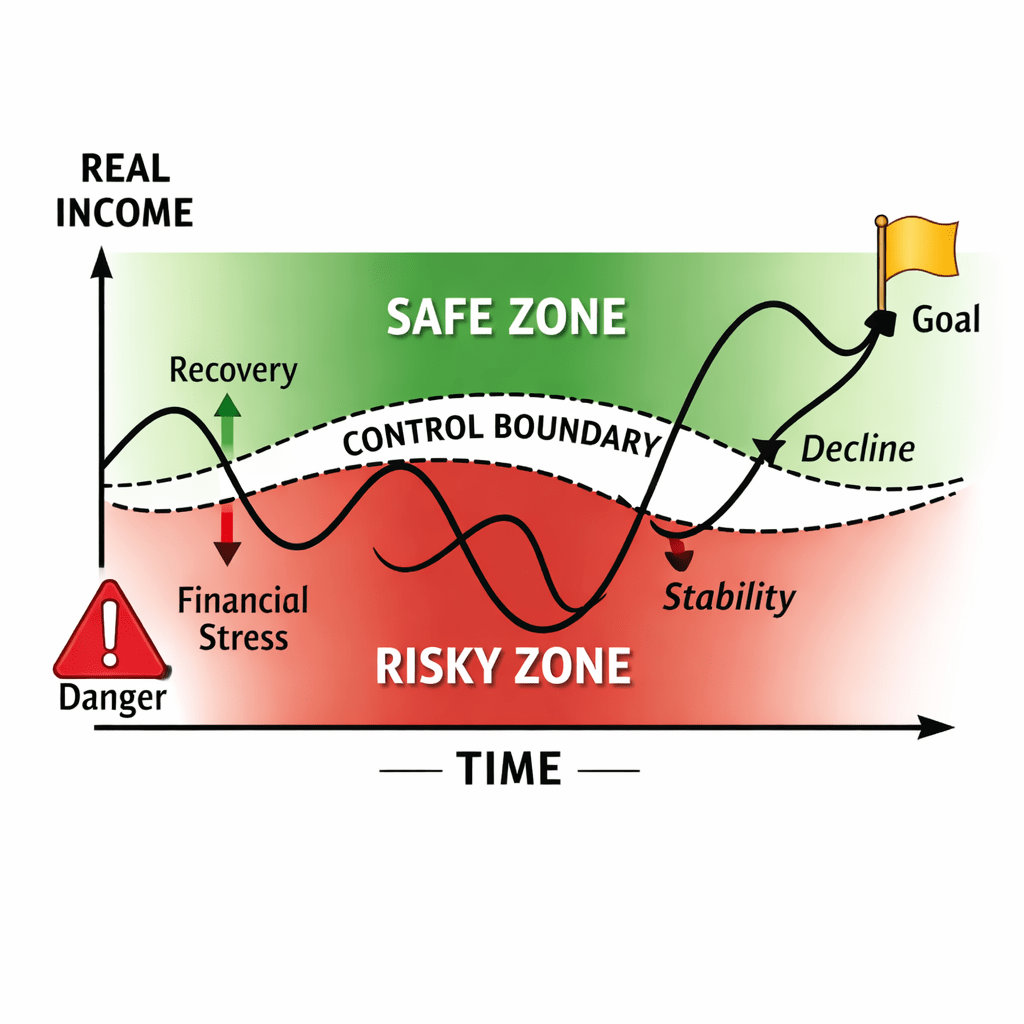
Compare what comes in versus what must go out to measure pressure, flexibility, and financial breathing room.
Once income and expenses are visible, the next step measures the relationship between them. Structural margin reveals how much room remains after required obligations are paid. This single measurement often determines whether a financial system feels stable, strained, or constantly under pressure.
Why it matters:
Without measuring margin, people often confuse activity with progress. A busy financial system is not always a stable one.
4. Identifying Hidden Spending Patterns
Find the quiet leaks, recurring charges, and expanding habits that gradually weaken the system.
Spending leaks rarely appear as one large expense. More often they emerge through small recurring behaviors, overlooked subscriptions, or spending categories that gradually expand over time. By identifying these patterns early, the financial system becomes easier to manage without relying on extreme budgeting rules.
Why it matters:
Cleaner awareness creates better control. This is where hidden friction becomes visible and manageable.
5. Confirming the Financial Baseline
Bring income, spending, and margin together so future budgeting and debt strategy rest on real numbers.
The final guide ensures the process is complete. By this point the system should reveal verified income, real spending patterns, and the margin separating financial stability from pressure. With those elements confirmed, later steps such as budgeting or debt strategy can be built on a foundation that is accurate and measurable.
Why it matters:
A strong baseline removes guesswork and gives every future recommendation a structure that can be trusted.
How To Use This Guide Hub
This page functions as the central navigation point for the first stage of the Diamond Standard Method. Readers can move through each guide in sequence, revisit specific topics when reviewing their own numbers, and continue deeper into the system as additional guides are published. Over time, this library will expand to include the next phases of budgeting systems, debt strategy, and wealth development.